
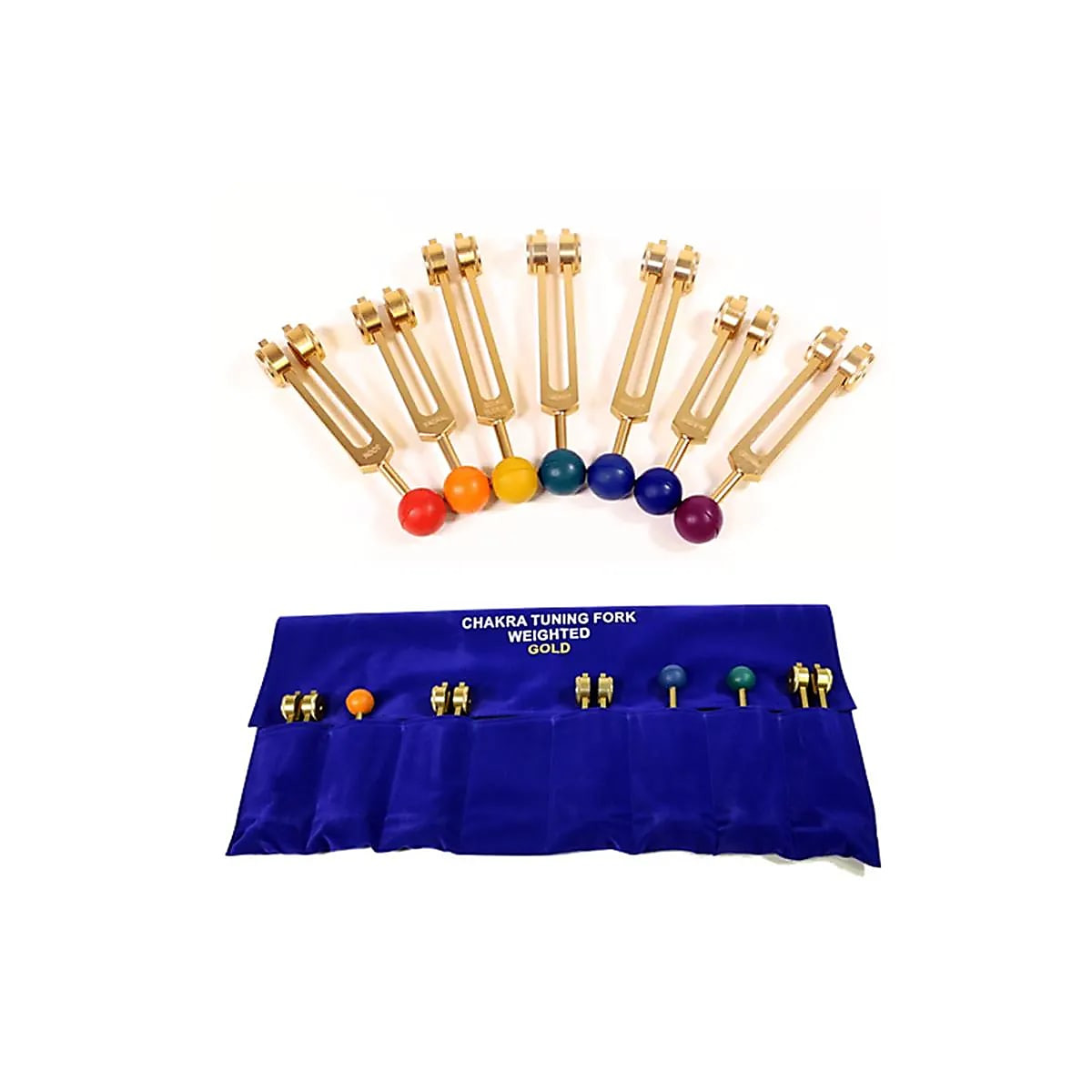


Soul Tuning Forks Chakra Gold Set


Set of seven weighted Tuning Forks for chakra treatment. Tuned with a deviation margin of ±0.25%.
- Includes blue velvet case.
- Material: aluminum
- Size: 17.5 to 21.5 cm
- Gold finish
- Total weight: 900 g
Anodized aluminum has a protective oxide coating through an electrical process in which the metal forms the anode of gold. Since the anodization process enhances a natural oxidation process, it is safe and does not produce any harmful or hazardous byproducts. Anodized products have an extremely long lifespan and offer significant economic advantages through savings in maintenance and operation. The anodization is a reactive finish that integrates with the underlying aluminum for total adherence and unmatched bonding.
Chakras are subtle points of energy, literally called wheels of energy. They function as energy exchange points. In fact, we have hundreds of chakra points throughout our energy system. However, the most well-known are the seven main chakras, which are connected in the central energy channel of our body that runs along the spine. When chakras are functioning properly, these centers are gateways for the life energy that enters our body through channels (nadis) and meridians throughout our body. At the same time, they are also outlets for the low-frequency energy to flow back to the transforming bodies. Each of the seven main chakras represents a level of consciousness or stage of life development, viewed from the perspective of our physical existence. Chakras can function poorly when they remain in a negative state for long periods due to negative habits and accumulated emotions. This makes it difficult for the personality to fully integrate the level of consciousness that each chakra represents. When the chakras are open and balanced, they form an integrated system where each chakra depends on the others to function optimally. These tools have been developed by Swiss mathematician and musicologist Hans Cousto.
1st CHAKRA ROOT/Muladhara/BASE - 194.18 Hz This chakra is related to instinct, the security, the survival, and also to basic human potential. This center is located in the region between the genitals and the anus. The root tuning fork has the same frequency as a day of the Earth, which is 24 hours. The color is red/orange. It is effective on the pubic bone and the coccyx.
2nd SACRAL/Svadisthana - 210.42 Hz This chakra corresponds to the testicles and ovaries that produce the sex hormones of the reproductive cycle. This tuning fork has the same frequency as the synodic period of the Moon, which is the time of the full Moon. This frequency stimulates the sexual energy and supports the erotic communication. It is also good for the cycles of the women and the disorders of the glandular and lymphatic system. It is also considered to relate more generally to the genitourinary system and the adrenal glands. The color is orange.
3rd SOLAR PLEXUS/Manipura - 126.22 Hz The tuning fork of the SOLAR PLEXUS has the same frequency as our star of the solar system, the Sun. This tuning fork aids in metabolism and the digestive system. The color is gold yellow.
4th HEART/Anahata - 136.10 Hz (Cosmic OM) The tuning fork of the HEART is tuned to the OM vibration and resonates with the Year of the Earth or the time it takes the Earth to rotate around the Sun, which is one year or 365 days. It helps with the relaxation. It is effective for the immune system and the circulation. The color is bluish-green. It aids in the spirituality and the devotion.
5th THROAT/Vishuddha Immune - 141.27 Hz The tuning fork of the THROAT has the same frequency as the planet Mercury. It relates to the communication and growth through the expression. This tuning fork helps the throat, the thyroid, a gland that is also in the throat and produces the immune hormones, responsible for growth and the maturation. The color is blue.
6th THIRD EYE/Ajña - 221.23 Hz The tuning fork of the THIRD EYE has the same frequency as the planet Venus. This tuning fork helps the pineal gland. The pineal gland is light-sensitive and produces the hormone melatonin that regulates sleep and wakefulness. The color is bright pink with luminous green. Use this tuning fork on the third eye, directly between the eyebrows.
7th CROWN/Sahasrara - 172.06 Hz The tuning fork of the CROWN has the same frequency as the Platonic year, which is 25,920 years. It is generally considered to be the chakra of the pure consciousness. Its function would be somewhat similar to the pituitary gland, which secretes hormones that communicate with the rest of the endocrine system and also connect with the central nervous system via the hypothalamus. The color is reddish-purple and violet. It aids in the universal consciousness, the meditation, and the unity. It brings joy and happiness. Use the tuning fork for the crown chakra at the highest part of the head, aligned with the top of the ears.
Differences between weighted and non-weighted tuning forks.
Weighted
- These tuning forks work more on the physical plane.
- It is possible to feel the vibration stronger and at a deeper level when the tube is placed on the body.
- Their sound lasts longer, but is softer and more diffuse.
- They are heavier.
- They are shorter in length than non-weighted forks.
- They are excellent for relieving pain, reducing the inflammation, and inducing the relaxation.
- They are typically placed on the body or near the ears.
- To make them sound, you can simply strike them on the palm of the hand or use a tuning fork activator.
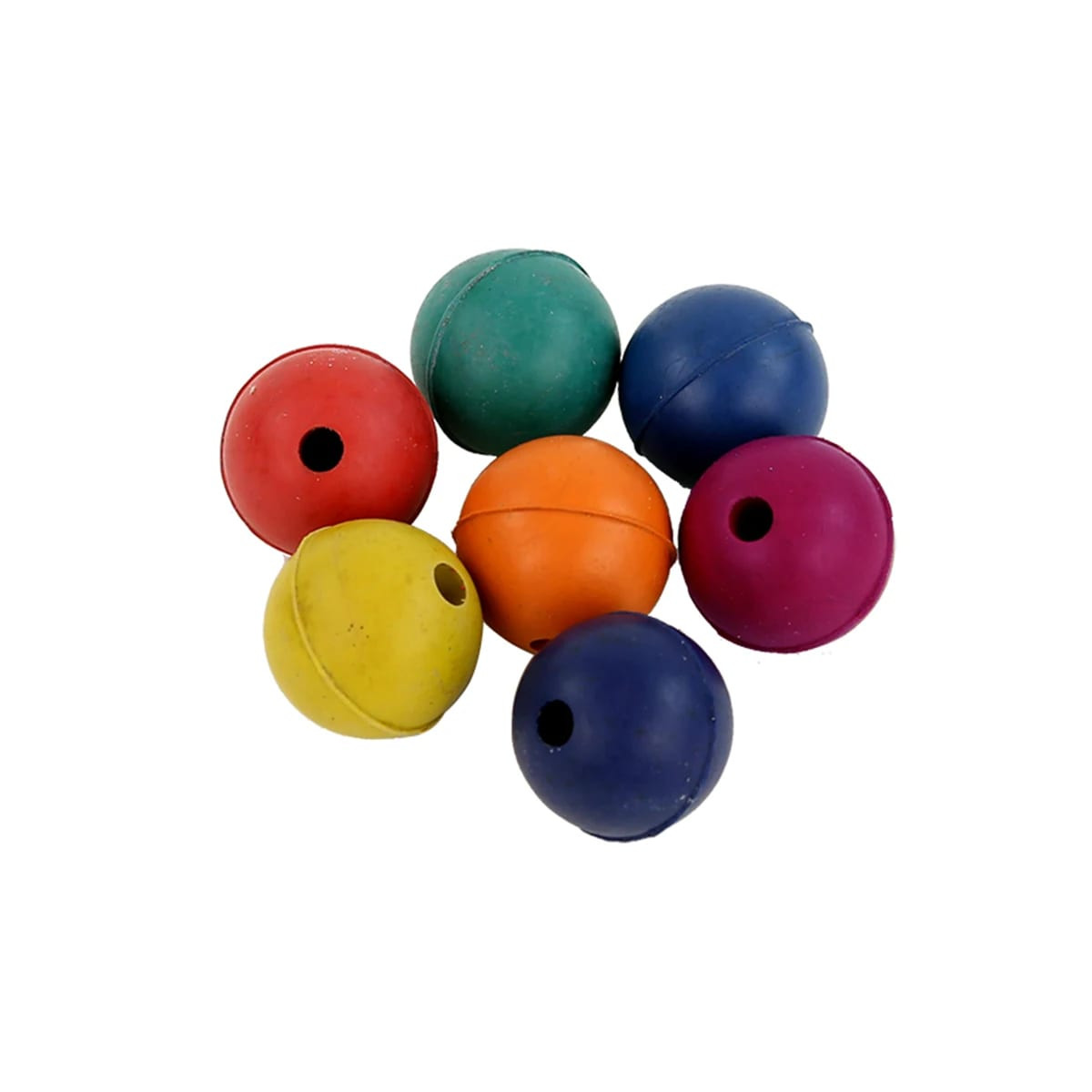
- The weighted tuning fork has a round weight at the end of each tube.
Non-weighted
- They act at a more subtle level, delicately or mysteriously.
- They move with less physical movement. The sensation of the vibration is more subtle when the tube is on the body.
- The sound does not last as long, but is sharper and more crystalline.
- They are lighter.
- They are longer than weighted tuning forks.
- They are excellent for mental and emotional balance, improving the energy field, enhancing the physical health, and promoting spiritual growth, helping to create inner harmony and fulfillment.
- These tuning forks are placed around the body and near the ears.
- To make them sound, you can simply strike two tuning forks together or use a tuning fork activator.
- Their ends finish straight.
EAN13:






 Hall of Fame